
The majority of Utah homeowners do not live in typical flood zones, such as those in Florida or Louisiana.
However, the climate changes our world is undergoing have led to a noticeable increase in convective storms that produce more severe rainfall than we have historically experienced. This additional rainfall exceeds what our properties and storm drainage systems were built to accommodate, and the result is damage to our homes and basements.
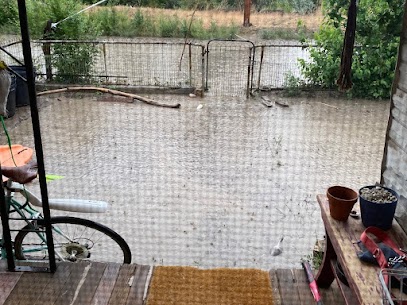
What Does Inland Flood Insurance Protect Against?
Inland Flood Insurance covers damage from these most common water perils:
- Heavy Rainfall
- Overflow of Streams or Rivers
- Excessive Snowmelt
Most folks are aware these types of floods are not covered by their standard homeowners insurance policy.
Here’s the good news! Inland Flood Insurance can be inexpensively added to most homeowners’ insurance policies to help protect against this type of loss.
What Is the Cost of Inland Flood Insurance in Utah?
When added to your homeowners insurance, Inland Flood Insurance will typically cost $400.00 per year.
There are different levels of coverage; we recommend at least $25,000. An inch of water in your basement can easily cause that much damage.
Most companies require that coverage for Backup of Sewers and Drains match the coverage for Inland Flood. For example, if you want $25,000 in coverage for Inland Flood, you must also carry $25,000 coverage for Backup of Sewer and Drains.
Are All Homes Eligible for Inland Flood Insurance?
Not all properties are eligible for Inland Flood insurance. It has to be added to a homeowners policy offered by a company that provides Inland Flood, and even then, there are limitations. Here are a few:
- Properties that are within a certain distance of a FEMA-designated flood zone
- Properties that are located in a FEMA-designated flood zone
- Properties that have a history of flood insurance losses
- Properties that are not eligible for homeowners insurance with a company that offers Inland Flood
The companies currently offering Inland Flood Coverage are:
- Auto Owners
- Cincinnati
- Midwest Family Mutual
- Stillwater
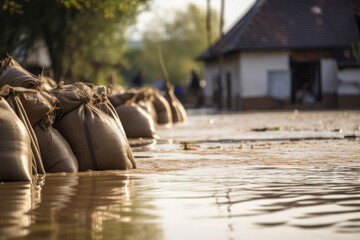
Who Should Consider Inland Flood Insurance in Utah?
You may want to consider Inland Flood Insurance for several reasons. First, there are areas that are more prone to flooding. Draper, Utah, for example, has a high water table, and many Anderson Insurance Group clients have filed claims and benefited from Inland Flood insurance.
If you live in an area where there is a high water table, or close to a river or canal, you may want to consider Inland Flood insurance.
Other reasons include homes with basements with window wells, homes with walk-out basements, and homes in areas where there is a risk of runoff. Homes in newer neighborhoods that don’t have established lawns and vegetation are at a significantly higher risk for basement flooding.
Get an Inland Flood Insurance Quote in Utah
The cost for Inland Flood Coverage will be added to a homeowners insurance quote through one of our carriers who provides Inland Flood coverage. We will need to start with a quote for your home insurance and gather all the details.
Call or click — we are available to provide the most comprehensive property insurance review you have ever experienced from an insurance agency.
Anderson Insurance Group
(801) 262-1551
Additional Inland Flood Resources:
What Does Flood Insurance Cover? | Anderson Insurance Group
Inland Flood Insurance | Acuity
How To Prevent Basement Flooding | Anderson Insurance Group
Midwest Family Mutual – for High Value Homes & First Class Clients | Anderson Insurance Group
Cincinnati Insurance Agency in Utah | Anderson Insurance Group
FEMA Flood Map Service Center | Welcome!
LEGAL DISCLAIMER: All insurance claims, including Inland Flood coverage is determined at the time of loss and based on the details of the loss. You must refer to your own homeowners and Inland Flood insurance policy to determine the coverage and limits that will apply to your property in the event of a loss.
Below is the Auto Owners Inland Flood Endorsement for reference. Refer to your own company’s policy and endorsements for your coverage details and limits.
Auto Owners Flood Insurance Policy Form 57779 (12-20)
Disclaimer – This endorsement does not satisfy mandatory flood insurance coverage should it be required by
your federally regulated lender for your home mortgage or loan. This insurance product is not affiliated with the National Flood Insurance Program.
This Inland Flood Coverage is added to Section I of the Homeowners Policy Form 3.
Inland Flood Coverage Endorsement: Policy Details
Agreement
We agree to provide the insurance described in this endorsement subject to all applicable terms and conditions of your Homeowners policy. This endorsement contains definitions, limitations, restrictions, and other terms separate and distinct from the remainder of your Homeowners policy. However, the provisions of this endorsement supersede any provisions to the contrary.
In return, you must pay the premium and comply with all the terms and conditions applicable to this insurance coverage. Coverage provided under this endorsement does not increase any limit of liability under Section I – Property Protection.
Scope of Coverage
- Exclusivity: The provisions of this endorsement apply only to this endorsement.
- Policy Integration: Except for cancellation, nonrenewal, “What To Do In Case Of Loss,” and “General Policy Conditions,” no other coverages or exclusions of the main policy apply to this endorsement unless specifically stated.
- Peril: This applies solely to the peril of inland flood.
- Timing: For coverage to apply, the flood occurrence must commence during the policy term.
Key Definitions
The following definitions are specific to this endorsement:
- Basement: Any area of the residence premises (including sunken rooms, garages, or crawl spaces) having any side of its floor below ground level.
- Basement Personal Property: Personal property owned by you, relatives, guests, or employees when located in the basement.
- Direct Physical Loss: Damage to covered property caused by inland flood, evidenced by physical change requiring repair or replacement.
- Flood Occurrence: The sum of all direct physical loss and covered expenses arising from inland flood occurring during one consecutive 168-hour time period (7 days).
- Inland Flood: A general and temporary condition of partial or complete inundation of normally dry land resulting from:
- Overflow of inland or tidal waters.
- Unusual and rapid accumulation or runoff of surface waters (rainfall, ice melt, etc.).
- Mudflow.
- Note: Inland flood does NOT include tsunamis.
- Mudflow: A river of liquid and flowing mud. It does not include landslides, slope failures, or saturated soil mass.
Property Coverages
Subject to the limits and sublimits shown in your Declarations, we cover:
- Dwelling: Direct physical loss to the dwelling and attached structures.
- Other Structures: Structures set apart from the dwelling by clear space (including those connected only by a fence or utility line).
- Personal Property: * Basement Property: Covered up to specific sublimits.
- Other Property: Personal property located on the premises at the time of the flood.
- Additional Living Expense & Loss of Rents: If the premises becomes unfit to live in, we cover increased living expenses or lost rental income for the shortest time required for repair or relocation.
- Debris Removal: Reasonable expenses to remove debris caused by an inland flood.
- Property Removed to Safety: Coverage for property moved to protect it from an endangering flood (applies for 30 days).
- Limited Fungi/Rot/Bacteria: Coverage for remediation and loss resulting from fungi or rot caused by a flood occurrence, subject to specific aggregate sublimits.
Property Not Covered
This endorsement does not cover:
- Personal property located outside or in/on/over water.
- Motorized vehicles, travel trailers, aircraft, or watercraft.
- Money, currency, securities, deeds, and valuable papers.
- Lawns, trees, shrubs, plants, or growing crops.
- Underground structures (wells, septic systems) and fences/retaining walls.
- Walks, decks, and driveways located outside the exterior walls of the residence.
- Hot tubs, spas (unless bathroom fixtures), and swimming pools.
- Structures or property used for farming or business.
Exclusions
We do not insure for loss or expense caused by:
- Business Interruption: Loss of revenue or profits.
- Ordinance or Law: Costs to comply with construction codes or pollutant testing.
- Pre-existing Floods: A flood occurrence already in progress when the endorsement becomes effective.
- Earth Movement: Earthquakes, landslides, or sinkholes (unless it is a “Mudflow” as defined).
- Water Backup/Seepage: Water entering through sewers/drains or subsurface water unless an inland flood is the proximate cause and there is evidence of flood on the premises.
- Information Technology Hazards: Damage to computer systems or data.
- Federal Land: Property on land leased from the Federal Government where they are held harmless for flooding.
Limits and Deductibles
Limits of Insurance
- Occurrence Limit: The most we will pay for any one 168-hour flood event.
- Aggregate Limit: The total amount we will pay for all flood occurrences during a single policy term.
- Sublimits: Limits for Basement Property, Living Expenses, and Fungi remediation are part of (not in addition to) the total Inland Flood limits.
Deductible
No loss is paid until the amount exceeds the deductible shown in your Declarations. If multiple deductibles apply to the same loss, only the largest single deductible will be used.
Other Insurance
If you have other insurance (such as a policy through the National Flood Insurance Program), this coverage acts as “excess.” We will only pay for the portion of the loss that exceeds what is due from the other insurance, whether you collect it or not.