
If you run or are starting a landscaping business in Utah, one of the most common questions is whether you need a contractor license.
The answer depends on the type of landscaping services you offer.
Some landscaping work is considered routine maintenance and may not require a state contractor license. Other services, especially those involving construction or installation, can require licensing through the state.
Understanding the difference can help you avoid compliance issues and make sure your business is properly protected.
This guide explains Utah landscaper license requirements, when a contractor license may be needed, and what insurance landscaping businesses should carry.
Do landscapers need a license in Utah?
Not always.
Whether a landscaper needs a license in Utah usually depends on the difference between maintenance services and landscape construction.
Basic lawn care and yard maintenance are generally treated differently than projects that involve installing structures, grading land, or modifying irrigation systems.
That means two landscaping companies may offer similar services, but only one may actually need a contractor license.
Landscaping services that may not require a contractor license
Many common landscaping services are considered routine property maintenance and may not require a contractor license.
Examples may include:
- Lawn mowing
- Yard cleanup
- Tree trimming
- Stump removal
- Lawn aeration
- Dethatching
- Power raking
- Artificial turf installation
- Basic fertilizing services
Even when a contractor license is not required, landscaping businesses may still need:
- A city Business License
- Commercial Auto Insurance
- General Liability Insurance
If your company applies herbicides or pesticides for hire, Utah may also require a pesticide applicator license through the Utah Department of Agriculture.
Landscaping work that usually requires a contractor license
When landscaping work moves beyond maintenance and into construction, licensing requirements are more likely to apply.
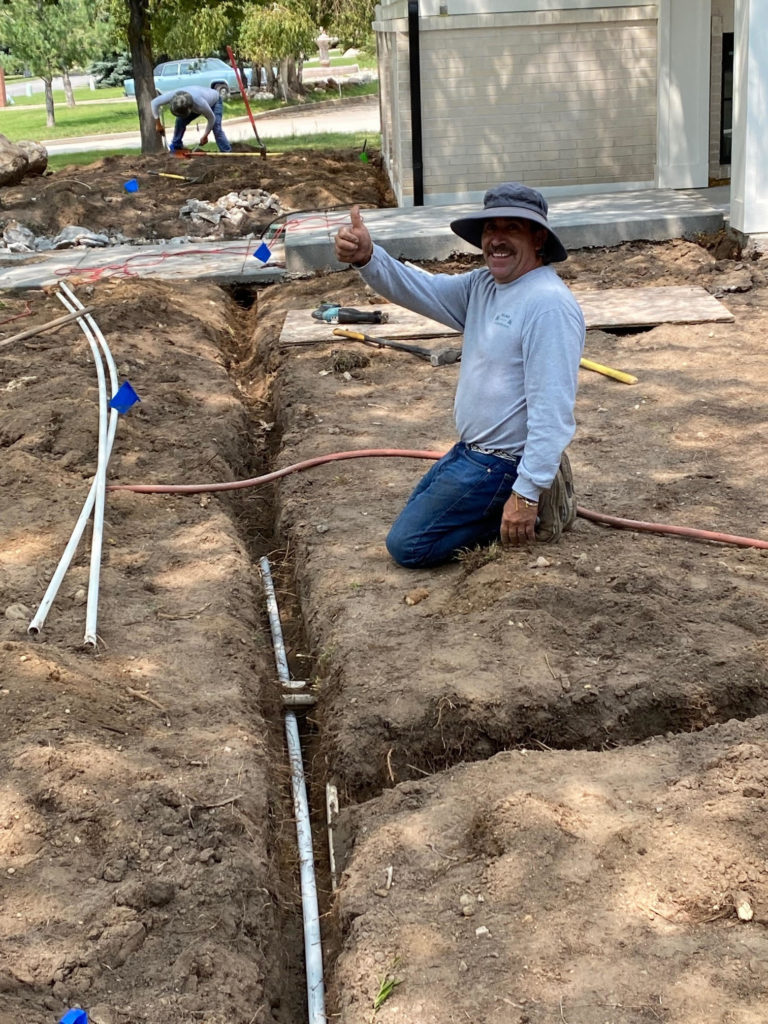
Examples include:
- Land grading or site preparation
- Irrigation or sprinkler system installation
- Retaining wall construction
- Patio installation
- Decks and pergolas
- Fence installation
- Walkways or hardscape features
- Landscape lighting systems
- Sports courts or recreation areas
These types of projects commonly fall under the S330 Landscape and Recreation Contractor license issued by the Utah Division of Professional Licensing.
A simple way to think about it: if the job involves building, installing structures, or altering the land, it is more likely to require a contractor license.
https://adminrules.utah.gov/public/rule/R156-55a/Current%20Rules?
What about landscaping projects under $7,000?
Utah law includes a small-project exemption for jobs under $7,000, which may allow certain work to be performed without a contractor license. However, you are still required to register with the Utah Division of Professional Licensing (DOPL).
This rule is often misunderstood.
The type of work being performed still matters. For example, routine lawn maintenance is very different from installing irrigation systems or building retaining walls, even if the project value is relatively small.
Because of this, landscaping companies that perform installation or construction work should not rely on the project value alone when determining whether a contractor license is required.
Pesticide licensing for landscapers
If your landscaping business applies herbicides, insecticides, or other pesticides for customers, Utah may require licensing through the Utah Department of Agriculture and Food.
This licensing requirement is separate from contractor licensing.
Services that may require pesticide licensing include:
- Weed control programs
- Lawn treatment services
- Chemical lawn applications
Landscaping companies expanding into lawn treatments should confirm whether pesticide licensing is required before offering those services.
Do landscapers need a city business license?
In many cases, yes.
Even if a landscaping business does not need a state contractor license, cities across Utah often require businesses to obtain a local business license before operating within city limits.
Cities may also require permits for work involving:
- Public rights-of-way
- Excavation
- Construction work
If your company works in multiple cities, it is important to check each city’s requirements.
Insurance for landscaping businesses in Utah
Insurance is just as important as licensing when protecting a landscaping business.
Landscaping companies face risks involving property damage, vehicle accidents, equipment theft, and employee injuries. The right insurance coverage can help protect your business if something goes wrong.
Common types of landscaping insurance include:
General liability insurance
General liability insurance protects your business if your work causes property damage or someone is injured.
Common landscaping claims include broken sprinkler lines, damaged fences, or property damage caused by equipment.
Workers’ compensation insurance
If your landscaping business has employees, workers’ compensation insurance is generally required in Utah and helps cover medical expenses if an employee is injured on the job.
Commercial auto insurance
Landscaping companies often operate trucks and trailers. Commercial auto insurance helps protect your business if an accident occurs while traveling between jobs.
Equipment coverage
Landscaping equipment such as mowers, trailers, and power tools can be expensive. Equipment coverage can help protect these tools from theft or damage.
Landscaping insurance in Utah
Understanding Utah landscaper license requirements is an important step for anyone starting or growing a landscaping business.
While some landscaping services may not require a contractor license, construction-related projects often do. Businesses may also need local licensing, pesticide certification, and the right insurance coverage depending on the services they offer.
At Anderson Insurance, we help landscaping businesses across Utah find insurance coverage that fits the work they actually perform.
Whether you need general liability, workers’ compensation, commercial auto insurance, or equipment coverage, our team can help you review your options and make sure your business is properly protected.
Anderson Insurance Group
(801) 262-1551